Scaling Your Startup: When to Transition from Shared Hosting to VPS in Kenya.

As your Kenyan startup grows, your website will require more resources and better performance. Transitioning from shared hosting to a Virtual Private Server (VPS) is a crucial step in scaling your online presence.
In this article, we’ll explore the limitations of shared hosting, the benefits of VPS, and when to make the switch.
Understanding Shared Hosting
Shared hosting is a popular choice for new websites due to its affordability. However, it comes with limitations that can hinder your startup’s growth:
- Shared resources lead to performance issues during traffic spikes
- Security risks arise from other websites on the same server
- Limited control over server configurations restricts customization
According to a survey, 45% of websites outgrow shared hosting within their first year. One Kenyan startup, ABC Ltd., faced frequent downtime and slow loading speeds as their customer base expanded, prompting them to consider VPS.
Benefits of VPS Hosting
Virtual Private Server (VPS) hosting offers dedicated resources and enhanced control for growing websites:
- Dedicated CPU, RAM, and storage ensure consistent performance
- Isolation from other websites enhances security
- Root access allows for server customization and software installation
| Feature | Shared Hosting | VPS Hosting |
|---|---|---|
| Resources | Shared | Dedicated |
| Performance | Inconsistent | Stable |
| Security | Vulnerable | Enhanced |
| Control | Limited | Root Access |
Migrating from Shared Hosting to VPS
Transitioning from shared hosting to VPS involves careful planning and execution:
- Prepare for migration by backing up your website and verifying access to your domain registrar and hosting accounts.
- Set up your VPS with the necessary software and configurations.
- Transfer your website files and databases to the VPS.
- Update your DNS records to point to the VPS IP address.
- Test your website’s functionality and performance post-migration.
DNS propagation can take up to 48 hours, but most changes occur within 4-8 hours. Minimize downtime by migrating during low-traffic periods and setting a low TTL value for your DNS records 24-48 hours before the move.
Optimization and Maintenance
After migrating to VPS, optimize your website’s performance with these strategies:
- Monitor resource usage regularly to identify bottlenecks
- Implement caching mechanisms and content delivery networks (CDNs)
- Optimize website code and database queries for efficiency
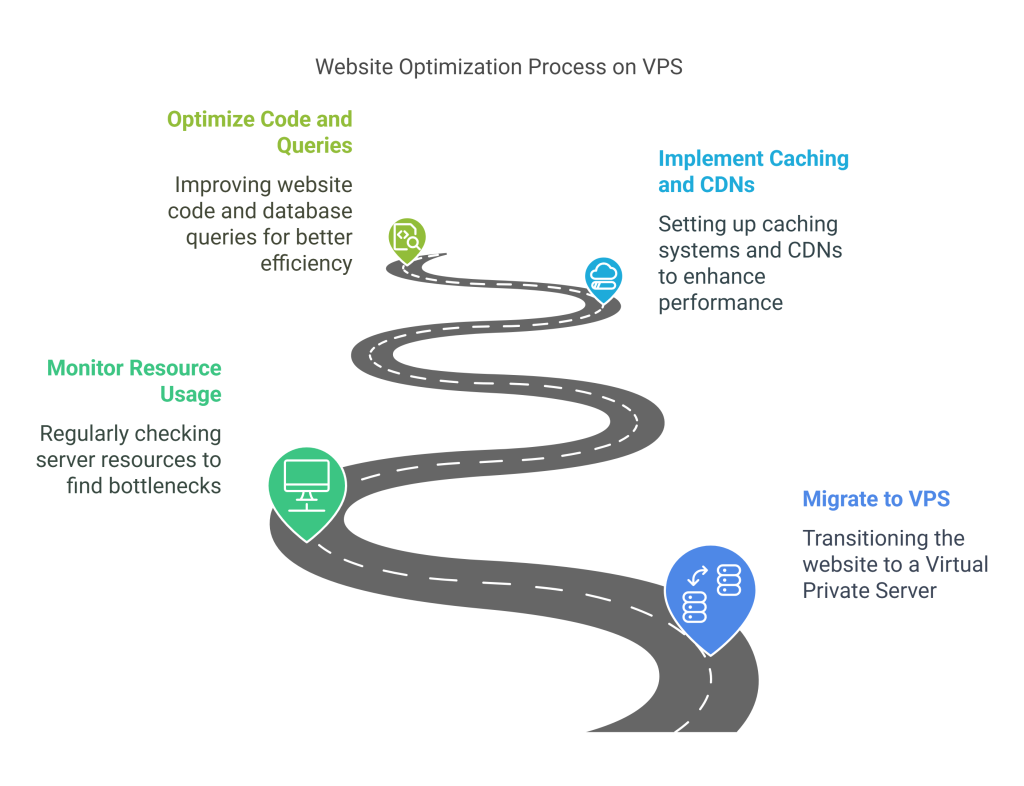
XYZ Inc., a Kenyan e-commerce startup, saw a 40% improvement in page load times after optimizing their VPS with caching and database indexing.
Final Thoughts.
Transitioning from shared hosting to VPS is a significant milestone for growing Kenyan startups. By understanding the limitations of shared hosting and the benefits of VPS, you can make an informed decision to scale your website.
With proper planning, migration, and optimization, your startup can unlock new opportunities for growth and success.
Ready to take your Kenyan startup to the next level? Explore Tayo Host’s VPS hosting plans and start your transition today!