
Navigating Kenyan Data Protection and Compliance Regulations in Shared Hosting.
The Data Protection Act 2019 establishes the legal framework for data protection in Kenya. Compliance with these regulations is crucial for businesses using shared hosting to process and store personal data.
This article explains the key provisions of Kenyan data protection laws and provides guidance on ensuring compliance in a shared hosting environment.
Understanding the Data Protection Act 2019
The Data Protection Act 2019 is the primary data protection legislation in Kenya. It is supplemented by the Data Protection (General) Regulations 2021 and the Data Protection (Registration of Data Controllers and Data Processors) Regulations 2021. These laws set out the rights of data subjects and the obligations of data controllers and processors.
Key provisions of the Data Protection Act 2019 include:
| Provision | Description |
|---|---|
| Data protection principles | Personal data must be processed lawfully, fairly, and transparently for specified purposes only, kept accurate and secure |
| Rights of data subjects | Includes rights to information, access, rectification, erasure, and data portability |
| Obligations of data controllers and processors | Implement appropriate technical and organizational measures, maintain records of processing activities, ensure data protection by design and default |
| Data protection impact assessments | Required for high-risk processing activities |
| Data protection officers | Mandatory for certain controllers and processors |
| Data transfers outside Kenya | Allowed with adequate safeguards or data subject consent |
Compliance Challenges in Shared Hosting
Shared hosting, where multiple websites are hosted on the same server, poses unique compliance challenges compared to dedicated hosting. The main risks include:
- Lack of control over server configuration and security measures
- Potential unauthorized access to personal data by other users on the same server
- Difficulty in isolating and protecting data in case of a breach
| Hosting Type | Data Protection Risks | Compliance Measures |
|---|---|---|
| Shared Hosting | High | Contractual safeguards, access controls, encryption |
| Dedicated Hosting | Low | Full control over server configuration and security |
According to a recent study, 35% of Kenyan hosting providers were found to be non-compliant with data protection regulations.
Ensuring Compliance in Shared Hosting
To mitigate the risks associated with shared hosting and ensure compliance with Kenyan data protection laws, businesses should implement the following measures:
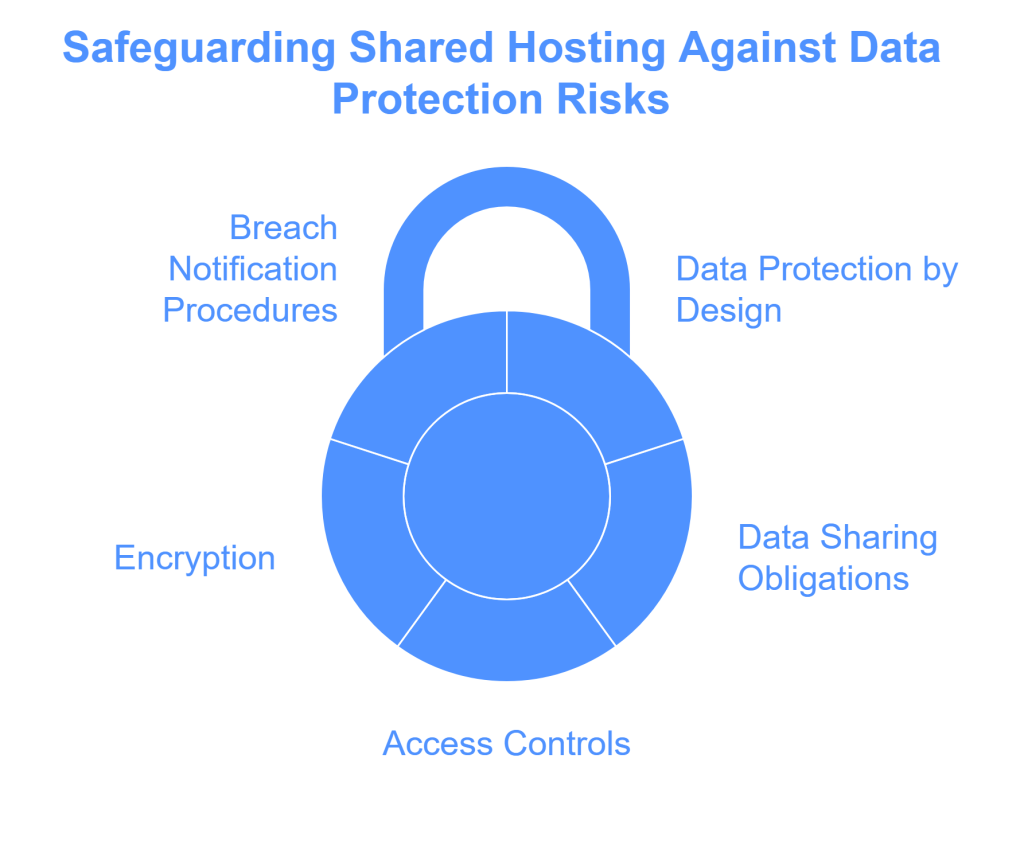
- Data protection by design and default: Integrate data protection principles into the design of systems and processes, and ensure default settings are privacy-friendly.
- Data sharing obligations: Establish contractual safeguards with hosting providers to ensure compliance with data protection laws, including provisions on data breaches and data transfers outside Kenya.
- Access controls: Implement strong access controls and authentication measures to prevent unauthorized access to personal data.
- Encryption: Use encryption for data at rest and in transit to protect against unauthorized access and data breaches.
- Data breach notification procedures: Develop and test data breach notification procedures to ensure timely reporting to the Data Commissioner and affected data subjects.
Implementing Best Practices in Shared Hosting.
A case study of a compliant shared hosting setup for a Kenyan e-commerce website demonstrates the following best practices:
- Comprehensive data protection policy covering all aspects of data processing
- Regular risk assessments and audits to identify and address vulnerabilities
- Staff training on data protection and security best practices
- Use of secure protocols (HTTPS) and security tools (WAF, IDS)
- Strict access controls and role-based permissions for system administrators
By implementing these technical and organizational measures, the website was able to achieve full compliance with Kenyan data protection regulations and maintain the trust of its customers.
Summary of Key Points
Compliance with Kenyan data protection laws is essential for businesses using shared hosting to process personal data. The Data Protection Act 2019 sets out the key principles and obligations for data controllers and processors.
Shared hosting poses unique challenges due to the lack of control over server configuration and the risk of unauthorized access. To ensure compliance, businesses should implement data protection by design and default, establish contractual safeguards with hosting providers, use strong access controls and encryption, and develop data breach notification procedures.
Continuous monitoring and updates are necessary to maintain compliance in the face of evolving threats and regulatory changes.
For more information on compliant shared hosting solutions in Kenya, contact Tayo Host to discuss your specific requirements and explore our range of secure and reliable hosting options.







3 Comments