Multilingual Websites on Web Hosting: Catering to Kenya’s Diverse Languages
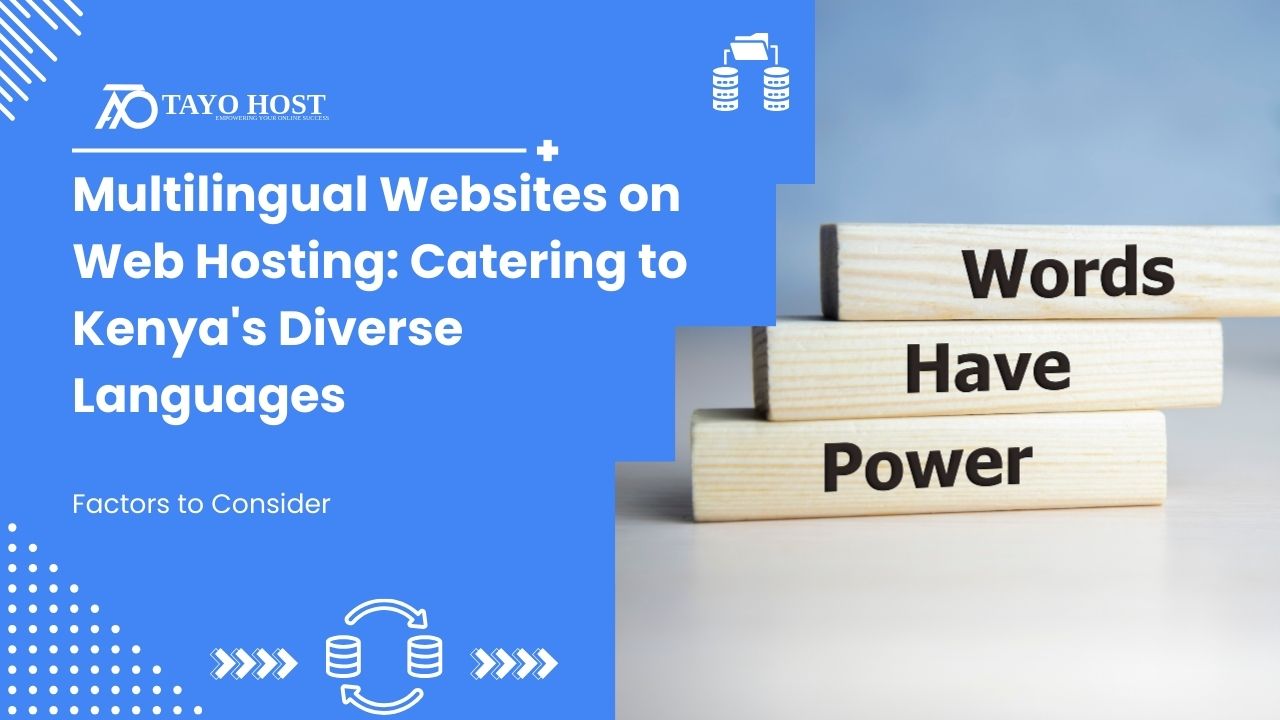
Multilingual websites are essential for businesses targeting Kenya’s linguistically diverse population. By offering content in multiple languages, companies can effectively reach and engage a broader audience, enhancing their online presence and market share.
Kenya’s rich tapestry of languages, including Kiswahili, English, and numerous regional dialects, presents both challenges and opportunities for web developers and marketers. Did you know that over 68 languages are spoken in Kenya?
This article will explore the intricacies of creating and hosting multilingual websites in Kenya, covering everything from technical SEO considerations to content optimization strategies.
Understanding Your Audience
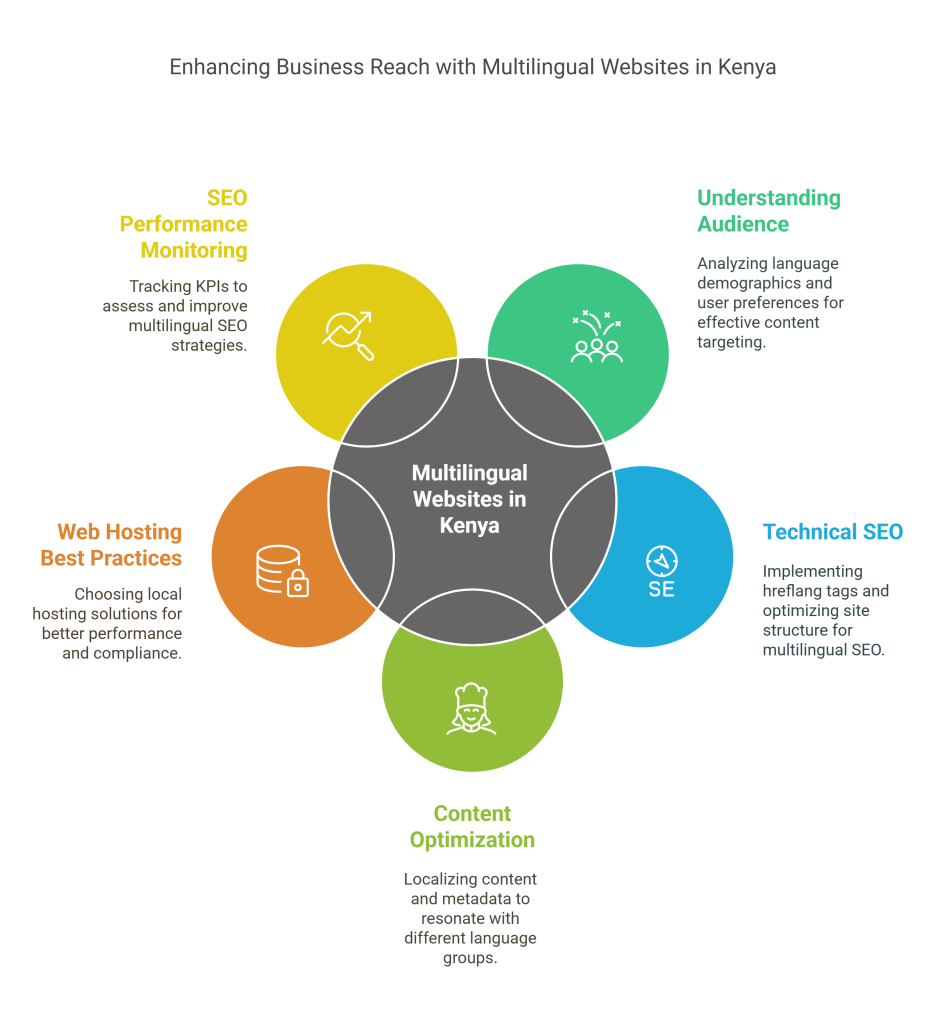
To create an effective multilingual website for the Kenyan market, it’s crucial to understand the language demographics and user preferences:
- Major Languages: Kiswahili and English are the official languages, with Kiswahili being the national language. English is widely used in business and education.
- Regional Variations: Kenya has over 40 ethnic groups, each with its own language. Some of the most widely spoken include Kikuyu, Luo, Kamba, and Kalenjin.
- User Behavior: Research shows that Kenyans prefer content in their native languages, especially for personal topics. However, English remains dominant in professional and academic contexts.
Understanding these nuances is crucial for tailoring your website’s content and structure to meet the diverse needs of Kenyan users.
Technical SEO for Multilingual Websites
Implementing Hreflang Tags
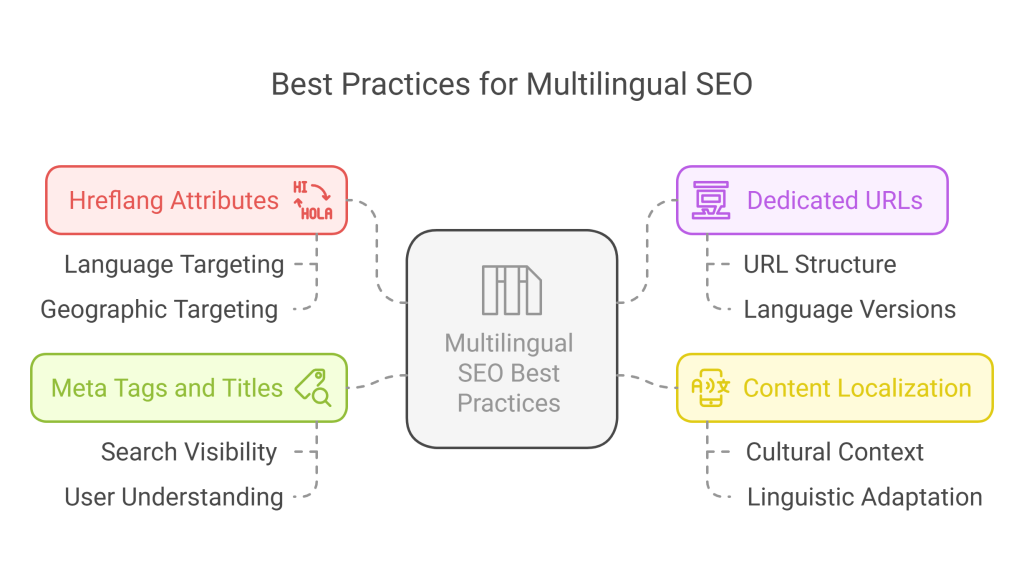
Hreflang tags are crucial for multilingual SEO in Kenya. They help search engines understand the language and regional targeting of your website’s pages. Proper implementation ensures that the right content is served to the right audience. Here’s an example of how to implement hreflang tags for a Kenyan multilingual site:
<link rel="alternate" href="https://example.com" hreflang="en-ke" />
<link rel="alternate" href="https://example.com/sw" hreflang="sw-ke" />
Clear Site Structure and Language Switcher
A clear site structure is essential for multilingual websites. Consider using a subdirectory structure (e.g., example.com/sw/ for Swahili content) or subdomains (e.g., sw.example.com). Implement an easily accessible language switcher, preferably in the header or footer, to allow users to toggle between languages seamlessly.
Server Location and CDN
For optimal performance, consider hosting your website on servers located in Kenya or nearby countries. Using a Content Delivery Network (CDN) can significantly improve loading times for users across different regions in Kenya. This is particularly important given the varying internet speeds across urban and rural areas.
Content Optimization for Multilingual SEO
Localized Content and Keyword Research
Effective multilingual SEO in Kenya requires thorough keyword research in each target language. Use tools like Google Keyword Planner or local SEO tools to identify relevant keywords and phrases. Remember that direct translations often don’t capture local nuances or search intent.
Create localized content that resonates with each language group. This goes beyond translation – consider cultural references, local events, and regional concerns to make your content truly relevant.
Metadata Optimization
Optimize metadata (titles, descriptions, and headers) for each language version of your website. Ensure that each version has unique, compelling metadata that incorporates relevant keywords. For example:
- English: “Best Web Hosting Services in Kenya | Fast & Reliable”
- Swahili: “Huduma Bora za Kuweka Tovuti Kenya | Haraka na za Kuaminika”
Best Practices for Web Hosting in Kenya
Choosing the Right Web Hosting Company
When selecting a web hosting company for your multilingual Kenyan website, consider the following factors:
- Local presence and understanding of the Kenyan market
- 24/7 customer support in multiple languages
- High server uptime guarantees (99.9% or higher)
- Fast loading speeds and reliable performance
- Scalability options to accommodate growth
Local web hosting companies in Kenya often provide advantages such as better understanding of local internet infrastructure and compliance with Kenyan data regulations.
Security Features and Backup Options
Ensure your chosen web host offers robust security features, including:
- SSL certificates for all language versions of your site
- Regular malware scans and removal
- DDoS protection
- Automated backup solutions with easy restore options
Monitoring and Analyzing Multilingual SEO Performance
Using SEO Tools for Language-Specific Tracking
Utilize SEO tools that support multilingual tracking, such as:
- Google Search Console for language-specific search analytics
- SEMrush or Ahrefs for tracking keyword rankings in different languages
- Google Analytics for analyzing user behavior across language versions
Key Performance Indicators (KPIs)
Monitor these essential KPIs for each language version of your website:
- Organic traffic growth
- Conversion rates
- Bounce rates
- Average session duration
- Keyword rankings for target terms
Regularly analyze this data to make informed decisions about content optimization and SEO strategies for each language.
Case Study: Successful Multilingual Website in Kenya
Let’s examine the case of “KenyaBiz,” a directory platform that successfully implemented a multilingual strategy:
- Implementation: KenyaBiz launched versions in English, Swahili, and three major regional languages.
- Technical Setup: Used subdirectories (e.g., kenyabiz.com/sw/) with proper hreflang tags.
- Content Strategy: Created unique, culturally relevant content for each language version.
- Results:
- 150% increase in organic traffic within 6 months
- 30% higher conversion rates on localized language versions
- Expanded customer base in rural areas by 40%
This case study demonstrates the significant impact of a well-executed multilingual strategy in the Kenyan market.
Conclusion
Implementing multilingual websites on web hosting platforms in Kenya is a powerful strategy for businesses looking to expand their reach and engage diverse audiences.
By understanding the unique language landscape, implementing proper technical SEO practices, and creating localized content, companies can significantly enhance their online presence.
Remember, success in multilingual SEO requires ongoing effort, regular monitoring, and adaptation to changing user preferences and search engine algorithms.
Ready to expand your online presence in Kenya with a multilingual website? Take the first step towards reaching a wider audience by implementing these strategies.
For reliable and efficient web hosting services that cater to multilingual needs, consider Tayo Host, known for their expertise in the Kenyan market. Start optimizing your website for Kenya’s diverse languages today and watch your online influence grow!
FAQs
- Q: How many languages should my Kenyan website support?
A: At minimum, consider English and Swahili. Adding major regional languages can further increase your reach. - Q: Is it necessary to have separate domains for each language version?
A: No, using subdirectories or subdomains on a single domain is often more efficient and easier to manage. - Q: How often should I update content on my multilingual website?
A: Aim to update content regularly across all language versions, ideally at least once a month. - Q: Can I use automatic translation tools for my website content?
A: While useful for basic understanding, automatic translations often lack nuance. Professional translation is recommended for best results. - Q: How do I handle user-generated content in multiple languages?
A: Implement language tags for user content and consider moderation in multiple languages to ensure quality. - Q: Are there any legal considerations for multilingual websites in Kenya?
A: Ensure compliance with Kenyan data protection laws and consider trademark implications for translated brand names. - Q: How can I improve loading speeds for my multilingual website in Kenya?
A: Use a CDN, optimize images, and consider AMP (Accelerated Mobile Pages) for faster mobile loading. - Q: Should I hire native speakers for content creation in each language?
A: Yes, native speakers can provide authentic, culturally relevant content that resonates better with the target audience. - Q: How do I handle currency and payment options for a multilingual e-commerce site in Kenya?
A: Offer prices in Kenyan Shillings and consider popular local payment methods like M-Pesa alongside international options. - Q: Can I use the same keywords across different language versions of my website?
A: No, conduct separate keyword research for each language to capture unique search patterns and intents.