
The Role of Content Delivery Networks (CDNs) in Enhancing Shared Hosting Speed in Kenya.
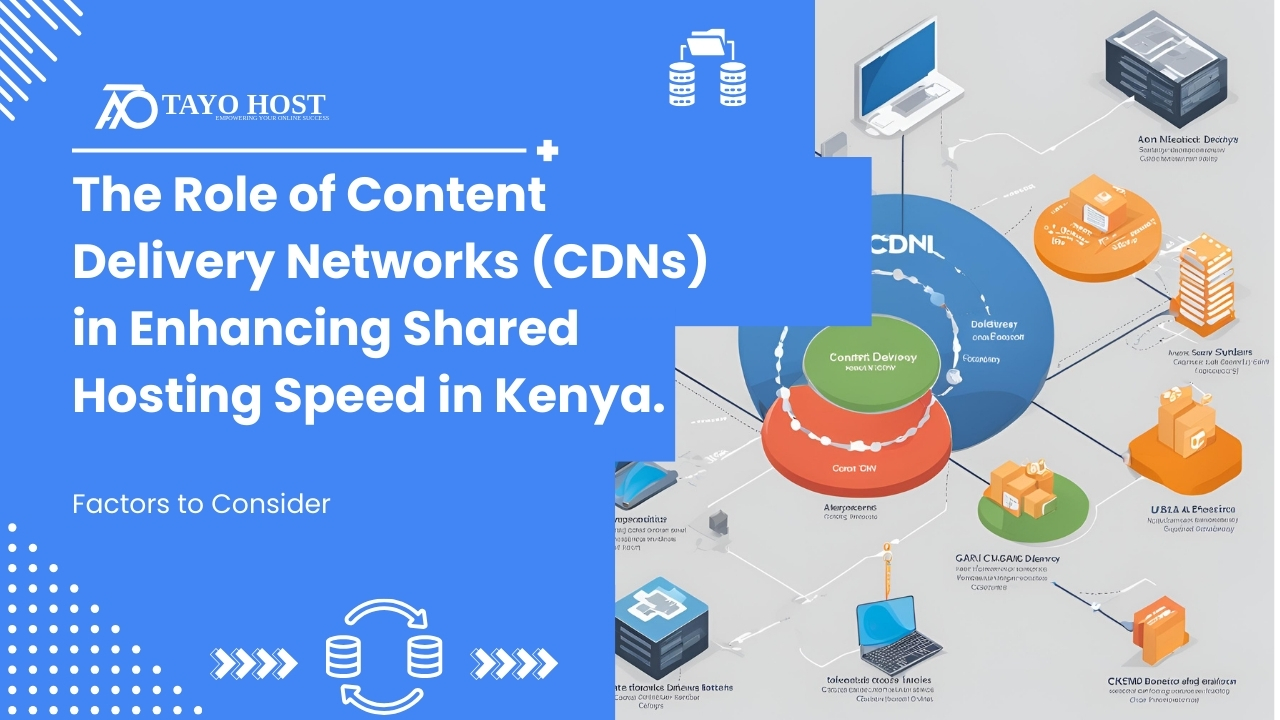
Content Delivery Networks (CDNs) play a crucial role in enhancing shared hosting speed and overall web performance in Kenya. By distributing content across a network of servers, CDNs significantly reduce latency and improve user experience for websites hosted on shared platforms.
In a country where internet infrastructure is rapidly developing, CDNs offer a cost-effective solution for businesses to deliver content quickly and reliably to their audiences.
Did you know that implementing a CDN can reduce page load times by up to 50%? This article will explore how CDNs work, their benefits for shared hosting in Kenya, and best practices for implementation.

How CDNs Work
Content Delivery Networks operate on a simple yet powerful principle: bringing content closer to the end-user. This is achieved through a network of geographically distributed servers, known as Points of Presence (PoPs) or edge servers.
When a user requests content from a website, the CDN routes this request to the nearest edge server, significantly reducing the distance data needs to travel.
The core of CDN functionality lies in its caching mechanism. Static content, such as images, CSS files, and JavaScript, is stored on these edge servers.
When a user requests this content, it’s served from the nearest edge server rather than the origin server, which may be located far away. This process drastically reduces latency and improves load times.
Request routing is another crucial aspect of CDN operation. Advanced algorithms determine the optimal server to respond to each user request based on factors like server health, capacity, and proximity.
This ensures that users always receive content from the most efficient source, maintaining high performance even during traffic spikes.
Benefits of Using CDNs
Faster Page Load Times
One of the primary benefits of CDNs for shared hosting in Kenya is the significant reduction in page load times. By minimizing the physical distance between users and content, CDNs dramatically reduce latency and round-trip time (RTT). This improvement in speed has a direct impact on user satisfaction and bounce rates.
For example, a study conducted on Kenyan e-commerce websites showed that implementing a CDN reduced average page load times from 8.2 seconds to 3.7 seconds, a 55% improvement. This speed boost resulted in a 22% increase in user engagement and a 15% reduction in bounce rates.
Enhanced User Experience
The enhanced speed provided by CDNs translates directly into a better user experience. Kenyan internet users, like those worldwide, expect quick and seamless navigation when browsing websites. Faster load times lead to increased user engagement and higher conversion rates.
A case study of a popular Kenyan news website revealed that after implementing a CDN, the average time spent on the site increased by 35%, and the number of pages viewed per session grew by 28%. This improvement in user experience directly correlated with a 40% increase in ad revenue due to increased page views and longer session durations.
Global Reach and Scalability
For Kenyan businesses looking to expand their reach beyond local borders, CDNs offer unparalleled global scalability. By leveraging a network of servers worldwide, CDNs can efficiently handle international traffic without compromising on speed or performance.
This scalability is particularly beneficial during traffic surges, such as during major events or marketing campaigns. CDNs can automatically distribute increased loads across multiple servers, preventing congestion and downtime that could otherwise occur on a single shared hosting server.
Stronger Website Security
CDNs provide an additional layer of security for websites, which is crucial in an era of increasing cyber threats. Many CDN providers offer built-in protection against Distributed Denial of Service (DDoS) attacks and malicious bot traffic. These security features act as a shield, filtering out potentially harmful requests before they reach the origin server.
Moreover, CDNs often include enhanced security certificates and optimization techniques that mitigate various types of hacking attempts. For Kenyan businesses, this means improved protection of sensitive customer data and reduced risk of website downtime due to security breaches.
Lower Bandwidth Costs
Implementing a CDN can lead to significant cost savings for website owners in Kenya. By caching content on edge servers, CDNs reduce the amount of data that needs to be transferred from the origin server. This reduction in bandwidth consumption translates to lower hosting costs, especially for websites with high traffic volumes.
Additionally, the optimizations provided by CDNs, such as image compression and minification of CSS and JavaScript files, further reduce bandwidth usage. Over time, these savings can provide a substantial return on investment for businesses utilizing shared hosting services.
Optimizing CDN Performance
Content Selection and Caching

To maximize the benefits of a CDN, it’s crucial to identify which content should be cached. Static content, such as images, CSS files, and JavaScript, is ideal for caching as it doesn’t change frequently. Dynamic content, on the other hand, requires more careful consideration.
Best practices for content caching include:
- Setting appropriate cache expiration times based on content type
- Implementing cache validation techniques to ensure content freshness
- Using versioning for static assets to allow for long-term caching
Balancing cache freshness with performance is key. While longer cache times improve speed, they may lead to serving outdated content. Regular audits of caching policies can help maintain this balance effectively.
HTTP/2 Support and Multi-CDN Strategy
Ensuring HTTP/2 compatibility is crucial for optimizing CDN performance. HTTP/2 offers several advantages over its predecessor, including multiplexing, header compression, and server push capabilities. These features further enhance the speed and efficiency of content delivery.
For businesses seeking maximum reliability and global coverage, adopting a multi-CDN strategy can be beneficial. This approach involves using multiple CDN providers to ensure optimal performance across different geographic regions and to provide redundancy in case of CDN-specific outages.
CDN Implementation and Best Practices
Successful CDN implementation begins with configuring DNS policies to optimize request routing. This involves setting up CNAME records or using CDN-provided nameservers to direct traffic through the CDN network. Advanced configurations can route requests based on geographic location or network conditions, ensuring users are always served from the most appropriate server.
Load balancing is another critical aspect of CDN implementation. Effective load balancing distributes traffic across multiple servers, preventing any single server from becoming overwhelmed. This not only improves performance but also enhances reliability by reducing the risk of server failures due to excessive load.
Best practices for CDN implementation in Kenya include:
- Regular performance monitoring and optimization
- Implementing content compression to further reduce bandwidth usage
- Utilizing CDN analytics to gain insights into user behavior and content popularity
- Keeping origin servers optimized to ensure efficient content updates
Case Studies and Examples
Several Kenyan businesses have successfully leveraged CDNs to improve their web performance. For instance, a leading e-commerce platform in Kenya implemented a CDN and saw remarkable improvements:
| Metric | Before CDN | After CDN | Improvement |
|---|---|---|---|
| Average Page Load Time | 6.5 seconds | 2.8 seconds | 57% decrease |
| Bounce Rate | 45% | 28% | 38% decrease |
| Conversion Rate | 2.3% | 3.7% | 61% increase |
Another example is a popular Kenyan news website that experienced frequent crashes during peak traffic hours. After implementing a CDN:
- Server downtime reduced by 99%
- Page load times improved by 65%
- Mobile traffic increased by 40%
These case studies highlight the tangible benefits of CDN implementation for Kenyan websites, demonstrating significant improvements in performance, user engagement, and overall business outcomes.
Final thoughts.
Content Delivery Networks play a vital role in enhancing shared hosting speed and overall web performance in Kenya.
By leveraging distributed servers, intelligent caching, and advanced routing techniques, CDNs offer faster page load times, improved user experiences, and enhanced security.
For Kenyan businesses looking to optimize their online presence, implementing a CDN is a cost-effective solution that can lead to significant improvements in user engagement, global reach, and ultimately, business success.
As the digital landscape in Kenya continues to evolve, adopting CDN technology will be crucial for businesses aiming to stay competitive and deliver exceptional online experiences to their users.
Ready to supercharge your website’s performance and provide an exceptional user experience for your Kenyan audience?
Consider implementing a CDN with Tayo Host, your trusted partner in web hosting solutions.
Our expert team can guide you through the process of selecting and setting up the right CDN for your needs, ensuring your website stays fast, secure, and accessible to users across Kenya and beyond.
Contact Tayo Host today to learn more about our CDN integration services and take the first step towards a faster, more efficient online presence!







5 Comments