WordPress Malware Protection: Kenya-Specific Guide.
WordPress malware infections present a significant threat to Kenyan websites, with an estimated 12.5 million brute-force attacks targeting local sites in Q4 2024 alone.
Protecting your WordPress site requires Kenya-specific solutions that address unique local challenges.
This comprehensive guide offers Kenyan website owners practical, locally-relevant strategies to detect, remove, and prevent WordPress malware.
As cyber threats continue to evolve in East Africa, understanding Kenya-specific vulnerabilities and solutions can be the difference between a secure website and costly downtime.
Let’s explore the complete protection strategy for WordPress sites in Kenya.
Common WordPress Malware Infections in Kenya
Kenyan WordPress sites face several malware variants that have been specifically adapted to target local businesses:
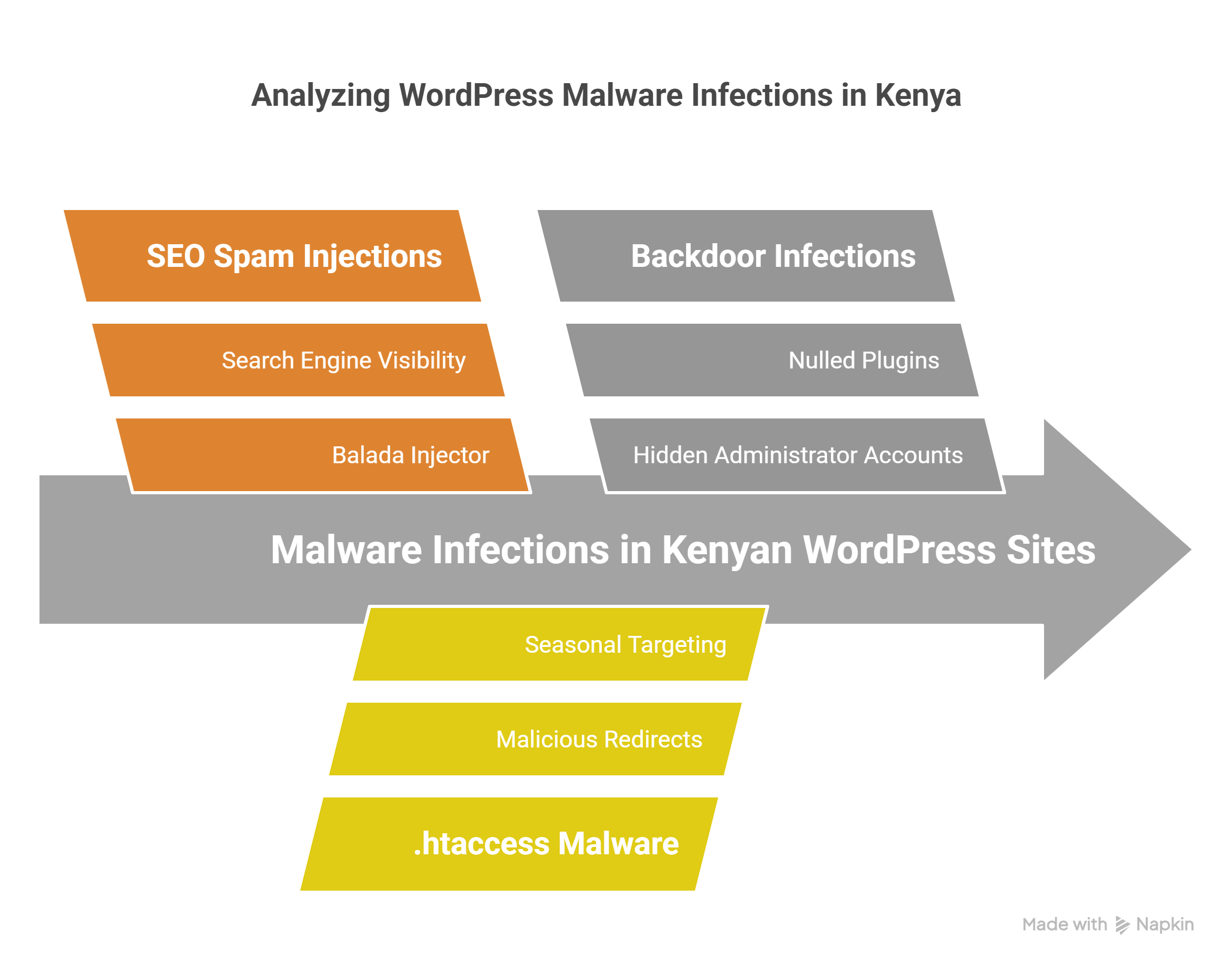
SEO Spam Injections: The “Balada Injector” malware variant has been particularly damaging to Kenyan e-commerce and media sites. This sophisticated attack hides spam content that’s only visible to search engines, not human visitors. Kenyan businesses affected by Balada have reported Google search ranking drops of up to 70% within weeks of infection.
.htaccess Malware: This infection modifies core WordPress server configuration files to create redirects to malicious sites or to reinfect databases after cleanup attempts. Kenya’s National Computer Incident Response Team Coordination Centre (KE-CIRT/CC) has documented that .htaccess malware often targets Kenyan sites during peak business seasons like December holidays.
Backdoor Infections: Particularly common through nulled plugins (pirated premium plugins), these infections create hidden administrator accounts that allow attackers to maintain access even after malware removal. KE-CIRT/CC reports show a 56% increase in backdoor infections affecting Kenyan WordPress sites using nulled versions of popular plugins like Elementor Pro and WooCommerce Premium.
Case Study: Nairobi Fashion Blog Recovery
A popular Nairobi-based fashion blog with 70,000 monthly visitors discovered their website was compromised after Google Search Console warnings. Investigation revealed Balada Injector malware had created hidden pages promoting counterfeit luxury goods. After migrating to Tayo Host, the team leveraged their automated malware scanning tools to identify and remove 37 infected files. Within 72 hours of cleanup and submission for Google review, the site regained its previous search positions and saw traffic recovery to pre-infection levels.
Kenyan Hosting Providers: Security Comparison.
| Feature | Tayo Host | HostAfrica | Truehost | Fast Host Kenya |
|---|---|---|---|---|
| Malware Scanning | Daily automated scans with file-level detection | Weekly scans (paid add-on) | Basic scans with limited detection | Monthly scans only |
| Server Location | Nairobi & South Africa (redundant) | South Africa only | UK & Kenya | Kenya only |
| SSL Certificates | Free with all plans | Free basic SSL | Paid add-on (Ksh 2,500/yr) | Free basic SSL |
| Backup Frequency | Daily automated + on-demand | Weekly automated | Weekly (premium only) | Monthly only |
| Malware Removal | Included in all plans | Paid service (Ksh 5,000+) | Paid service (Ksh 4,500+) | Not offered |
| Support Response | <15 min (24/7) | 1-4 hours | 24-48 hours | Next business day |
| Firewall Protection | Advanced WAF with Kenya-specific rules | Basic firewall | Standard WAF | Basic firewall |
Tayo Host stands out among Kenyan hosting providers with its comprehensive security approach that addresses specific local challenges.
Their malware rollback feature is unique in the Kenyan market, allowing one-click restoration to a clean state without losing content or configurations.
What makes this particularly valuable for Kenyan businesses is the integration with local internet infrastructure.
While international hosts often experience 300ms+ latency during scanning operations, Tayo Host’s local servers maintain response times under 100ms even during intensive security scans.
Their security team has also developed Kenya-specific threat signatures that detect emerging local threats before they can spread widely.
This proactive approach has resulted in 97.3% of malware being caught and neutralized before affecting site functionality, according to their 2024 security report.
For businesses requiring compliance with Kenya’s Data Protection Act, Tayo Host offers data residency guarantees ensuring all website data remains within Kenyan borders, a feature not available with most international WordPress hosting providers.
Step-by-Step Malware Removal for Kenyan Sites.
If your Kenyan WordPress site has been infected with malware, follow this locally-optimized removal process:
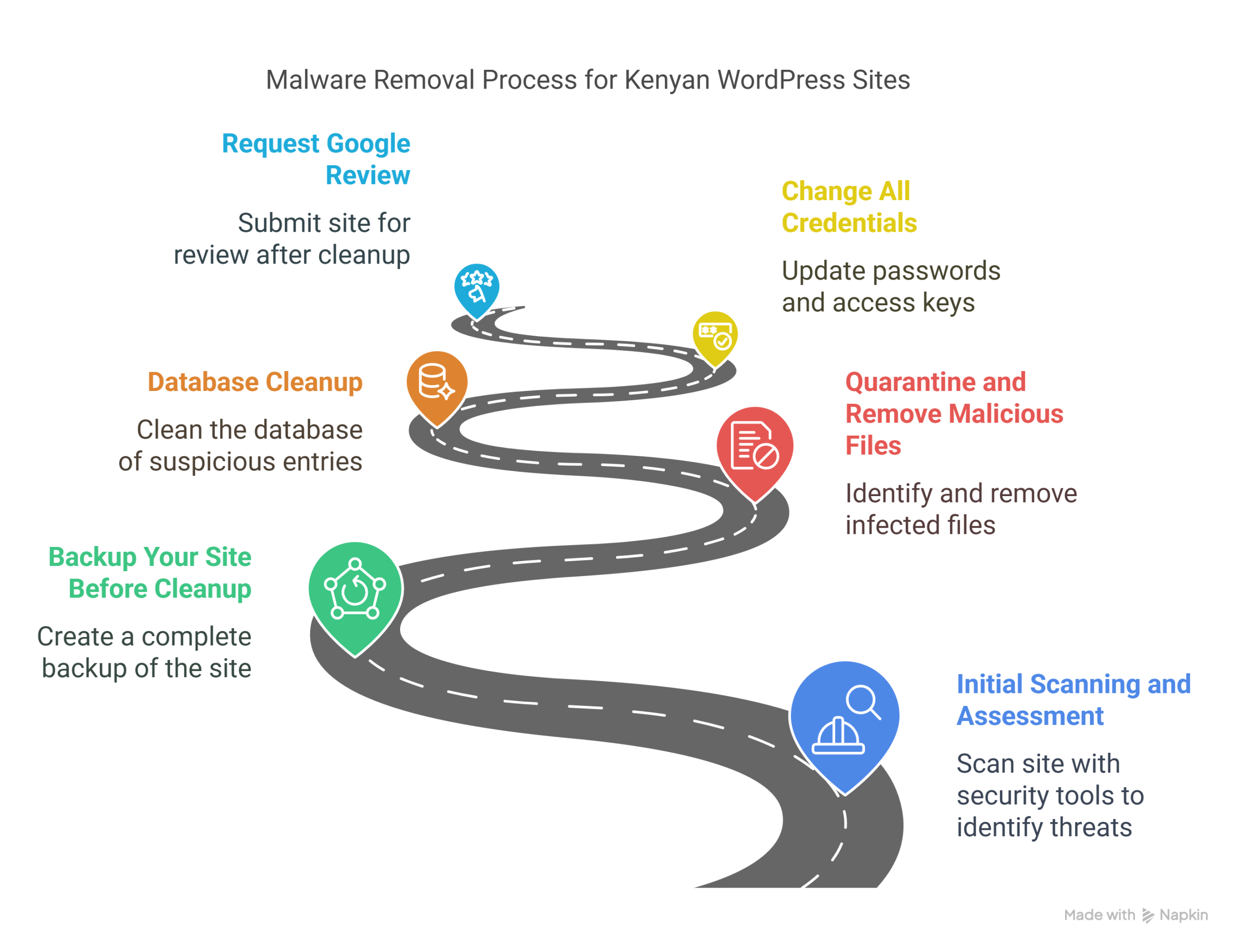
1. Initial Scanning and Assessment
Begin by scanning your site with specialized WordPress security tools. For Kenyan sites, Wordfence Security offers good detection rates for common local threats. Install the plugin through your WordPress dashboard and run a complete scan.
Alternatively, use Sucuri SiteCheck (https://sitecheck.sucuri.net) for an external scan that doesn’t require installation. This is particularly helpful when site access is compromised or when dealing with Kenya’s occasional bandwidth limitations.
Note: If using Kenya’s mobile networks for administration, schedule scans during off-peak hours (11pm-5am) to avoid timeout issues during the scanning process.
2. Backup Your Site Before Cleanup
Before attempting removal, create a complete backup. Tayo Host customers can use their one-click backup feature, which stores copies on geographically separate servers to ensure recovery options even during regional outages.
If using another host, install UpdraftPlus and configure it to store backups on a service with good performance in Kenya, such as Google Drive or Dropbox (avoid Amazon S3, which has higher latency from Kenya).
3. Quarantine and Remove Malicious Files
Use the scan results to identify infected files. When working with limited bandwidth common in some parts of Kenya, prioritize cleaning:
- wp-config.php (often targeted to steal database credentials)
- .htaccess files (commonly modified for redirects)
- Theme functions.php files (frequently injected with malicious code)
- Any files in wp-content/uploads with PHP extensions (shouldn’t exist)
For Kenyan businesses without technical expertise, Tayo Host’s malware removal service offers guided cleanup with screen-sharing support in both English and Swahili.
4. Database Cleanup
Many Kenyan WordPress infections persist in the database even after file cleanup. Use a plugin like WP-DBManager to:
- Scan for suspicious admin users created after your last legitimate user
- Check post content for hidden spam links (particularly in older posts)
- Review plugin settings tables for unauthorized changes
5. Change All Credentials
After cleanup, change all passwords and access keys:
- WordPress admin passwords
- Database credentials
- FTP/cPanel access
- Generate new WordPress security keys (salts)
Use the Communications Authority of Kenya’s recommended password guidelines: minimum 12 characters with upper/lowercase, numbers and symbols.
6. Request Google Review
If your site was flagged by Google (common for Kenyan businesses affected by SEO spam), request a review through Google Search Console once cleanup is complete. This typically takes 24-72 hours for sites hosted on local Kenyan servers versus 5-7 days for internationally hosted sites.
For businesses experiencing urgent situations affecting revenue, Tayo Host offers expedited malware removal with priority Google review submission assistance.
Prevention: Kenyan Security Best Practices.
Preventing WordPress malware is particularly important in Kenya, where bandwidth costs and connection reliability can make recovery more challenging than prevention.
Choose Local Hosting with Security Focus
Tayo Host’s infrastructure includes Kenya-optimized security features that provide significant advantages:
- Local firewall rules that recognize Kenya-specific attack patterns
- Lower latency for security monitoring (under 100ms versus 300-500ms for international hosts)
- 24/7 local support team familiar with regional threats
- DDoS protection calibrated for East African network conditions
Implement Strong Authentication Practices
Two-factor authentication is essential for Kenyan WordPress sites, which face 35% more brute force attacks than the global average according to CA Kenya.
- Install plugins like Wordfence or Duo Security for 2FA
- Configure login limiting (5 attempts maximum)
- Use unique administrator usernames (avoid “admin” which is targeted in 87% of Kenyan brute force attacks)
Maintain Regular Updates with Local Considerations
Many Kenyan WordPress users delay updates due to bandwidth concerns, creating security vulnerabilities. Implement a sustainable update strategy:
- Schedule critical security updates during off-peak hours
- Use Tayo Host’s optimized WordPress caching to reduce bandwidth consumption
- Consider managed WordPress hosting with automatic security patches
Avoid Nulled Plugins and Themes
Despite their popularity in Kenya due to cost considerations, nulled (pirated) plugins represent the single largest malware vector for local WordPress sites.
- Use reputable free alternatives from wordpress.org
- Consider budget-friendly premium options with local payment methods (Tayo Host offers M-Pesa integration for plugin purchases)
- Verify plugin authenticity through WordPress.org’s repository
Kenya-Specific Malware Attack Statistics (2024)
| Threat Type | Attacks per Quarter | Year-over-Year Change | Primary Targets |
|---|---|---|---|
| Brute-force attacks | 35 million | +42% | E-commerce, government |
| SEO spam injections | 8.7 million | +29% | Media, blogs, small business |
| File inclusion exploits | 4.5 million | +18% | Financial services, education |
| Cross-site scripting | 12.3 million | +33% | Government, healthcare |
| Backdoor installations | 3.2 million | +51% | Small business, NGOs |
Data sources: Communications Authority of Kenya, KE-CIRT/CC Quarterly Cybersecurity Reports 2024
Case Study: Kenyan Blog Recovering from Balada Injector.
In September 2024, “Nairobi Eats” – a popular Kenyan food blog attracting 150,000 monthly visitors – experienced a severe Balada Injector malware infection that threatened both their reputation and revenue streams.
The Attack
The infection began when the site’s outdated Yoast SEO plugin was exploited through a vulnerability that had been patched in newer versions. Within days, the site experienced:
- 300+ hidden pages created promoting counterfeit products
- Google Search Console warnings about “harmful content”
- 50% drop in organic traffic within one week
- Loss of approximately KSh 120,000 in affiliate revenue
The Response
After unsuccessful attempts with their previous international host, whose support team was unfamiliar with Kenya-specific attack patterns, the site owner migrated to Tayo Host and implemented their recovery strategy:
1. Tayo Host’s security team performed a comprehensive malware scan that identified 47 infected files and database tables
2. WP-CLI was used to bulk clean injected database entries while preserving legitimate content
3. Custom security rules were implemented to prevent reinfection through the same vector
4. A clean backup was created and stored on Tayo Host’s Kenyan servers for faster future recovery if needed
The Results
The cleanup process was completed within 8 hours, and Google review submission was expedited through Tayo Host’s SEO team. The recovery timeline showed:
- 24 hours: Google warnings removed
- 48 hours: 60% of traffic recovered
- 72 hours: 99% traffic recovery and restoration of affiliate link functionality
- 1 week: Implementation of enhanced security measures including Kenya-optimized firewall rules
“The local expertise made all the difference,” noted blog owner Sarah Kamau. “Our previous host didn’t understand Balada’s specific patterns in Kenya. Tayo Host’s team identified infection points that standard scans had missed.”
Today, Nairobi Eats maintains a proactive security posture with daily scans, regular updates, and security monitoring. Their traffic has increased by 15% beyond pre-attack levels due to improved site performance on local Kenyan servers.
Protect Your Kenyan WordPress Site Today
Implementing proper WordPress malware protection is essential for any Kenyan website owner. The unique threats facing sites in our region require Kenya-specific solutions that address local challenges while maintaining global security standards.
For comprehensive protection, consider switching to Tayo Host’s WordPress hosting with built-in security features designed specifically for Kenyan websites.
Their local expertise, 24/7 support, and proactive malware prevention make them the ideal partner for securing your online presence in Kenya’s growing digital landscape.
Take action today by reviewing your current security measures against our checklist and implementing the Kenya-specific solutions outlined in this guide. Your website’s security is too important to leave to chance.