
The State of Shared Web Hosting in Kenya: 2025 Market Analysis.

Articles Summary.
The shared web hosting market in Kenya is poised for significant growth in 2025, driven by increasing internet penetration and a burgeoning digital economy.
As small businesses and individuals seek affordable online presence solutions, shared hosting emerges as a cost-effective option.
With projections indicating a 15% year-over-year growth in the Kenyan web hosting sector, understanding the current landscape is crucial for both providers and consumers. How will this evolving market shape Kenya’s digital future?
Market Overview
Kenya’s digital landscape is experiencing rapid transformation, with internet penetration reaching 85.2% in 2023. This growth is fueled by increased smartphone adoption and improved infrastructure.
The eCommerce market, a key driver for web hosting demand, is projected to reach US$793.70 million in revenue by 2025.
| Metric | Value |
|---|---|
| Internet Users in Kenya (2023) | 44.6 million |
| eCommerce Revenue Projection (2025) | US$793.70 million |
| Internet Penetration (2023) | 85.2% |
The rise of digital payment systems, such as M-Pesa, has significantly contributed to the growth of online transactions. This trend is expected to continue, driving demand for reliable web hosting services to support eCommerce platforms and business websites.
Author Note: The correlation between eCommerce growth and web hosting demand cannot be overstated. As more Kenyan businesses move online, the need for robust, affordable hosting solutions becomes paramount.
Key Factors in Choosing Shared Web Hosting
When selecting a shared web hosting provider in Kenya, several factors stand out as critical:
Server Performance
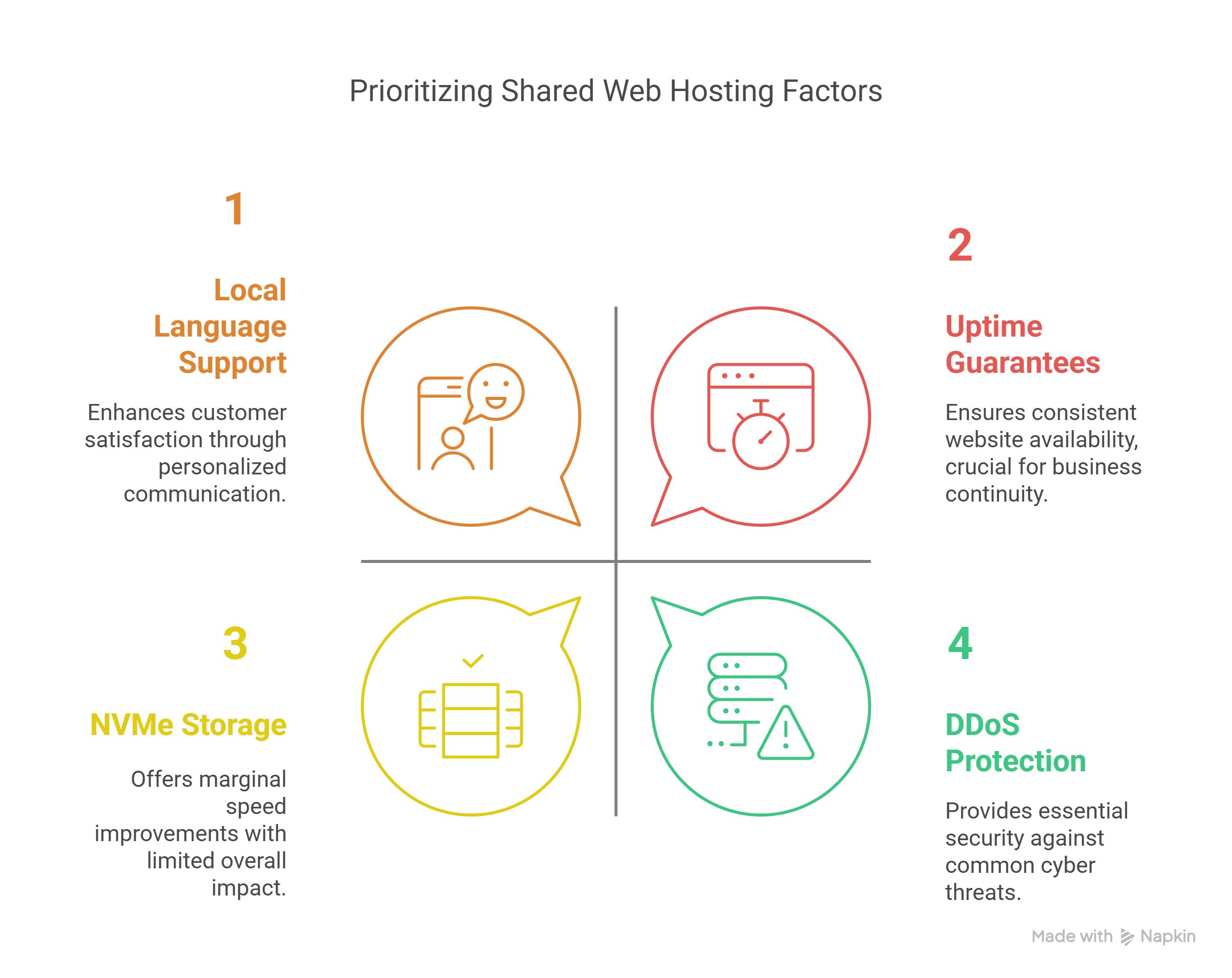
- NVMe Storage: Offers faster read/write speeds compared to traditional SSDs.
- Built-in Caching: Improves website load times and user experience.
- Resource Allocation: Look for providers offering generous CPU and RAM allowances.
- Uptime Guarantees: Aim for providers promising 99.9% or higher uptime.
Customer Support
- 24/7 Availability: Ensures issues can be resolved promptly, regardless of time.
- Multiple Support Channels: Look for providers offering live chat, phone, and email support.
- Local Language Support: Kenyan providers offering support in Swahili can be advantageous.
While global hosting providers dominate the market, local Kenyan companies like Tayo Host emerging with tailored solutions. These provider often offer more localized support and understand the unique challenges of the Kenyan market.
Security and Scalability
Security concerns in shared hosting environments are paramount, especially with the rise of cyber threats targeting small businesses. Key security measures include:
- Regular Malware Scanning
- DDoS Protection
- SSL Certificates (often included free)
- Web Application Firewalls (WAF)
Scalability is equally important as businesses grow. Look for providers offering:
- Easy upgrades to VPS or dedicated hosting
- Cloud-based solutions for flexible resource allocation
- Content Delivery Network (CDN) integration for improved performance
Case studies of Kenyan businesses successfully scaling with shared hosting are limited. However, companies like Jumia Kenya have demonstrated the potential for growth from shared hosting to more robust solutions as their online presence expanded.
Market Trends and Opportunities
The global web hosting market is experiencing significant shifts, with implications for the Kenyan market:
| Trend | Impact on Kenya |
|---|---|
| Cloud Hosting Growth | Increasing adoption of hybrid and cloud solutions |
| Green Hosting | Growing interest in environmentally friendly hosting options |
| AI-driven Management | Emergence of smarter, more efficient hosting platforms |
Local market opportunities are abundant, particularly in Nairobi’s thriving tech ecosystem. Initiatives like Konza Technopolis are fostering innovation and creating demand for robust hosting solutions. The growth of fintech and agritech sectors in Kenya is also driving the need for specialized hosting services.
Author Note: The convergence of global trends and local innovation is creating a unique landscape for web hosting in Kenya. Providers who can bridge this gap will likely see significant success in the coming years.
Challenges and Considerations
Despite the growth potential, the Kenyan shared hosting market faces several challenges:
Technical and Resource Challenges
- Shortage of local technical expertise in advanced hosting technologies
- Limited infrastructure in rural areas, affecting service delivery
- Power reliability issues impacting server uptime
Economic and Regulatory Factors
- Currency fluctuations affecting pricing for international hosting services
- Data protection regulations (like the Data Protection Act, 2019) impacting data storage and transfer
- Limited local peering points, affecting latency for locally hosted websites
The impact of Kenyan regulations on web hosting services is significant. The Data Protection Act, 2019, for instance, requires hosting providers to implement stringent data protection measures and may influence where data can be stored, potentially favoring local providers.
Conclusion
The shared web hosting market in Kenya is at a pivotal point, with tremendous growth potential balanced against unique challenges. As internet penetration increases and more businesses embrace digital transformation, the demand for reliable, secure, and scalable hosting solutions will continue to rise.
Local providers have an opportunity to carve out a significant market share by offering tailored solutions that address the specific needs of Kenyan businesses. The future of shared web hosting in Kenya looks promising, with innovation and adaptation key to success in this dynamic market.
Ready to launch your online presence or upgrade your current hosting? Consider Tayo Host for reliable, secure, and scalable shared hosting solutions tailored for the Kenyan market. Visit our website today to explore our hosting plans and start your digital journey with confidence.







One Comment