Domain Name Disputes in Somalia: Resolution Processes and Best Practices.
Domain name disputes in Somalia present unique challenges due to the country’s complex legal landscape and traditional dispute resolution mechanisms.
These conflicts, often involving trademark infringement or cybersquatting, require careful navigation of both modern and traditional systems.
This article explores the resolution processes and best practices for domain name disputes in Somalia, offering insights for legal professionals, business owners, and domain name registrants alike.
From the application of global policies to the role of clan elders, we’ll examine how Somalia’s unique context shapes the resolution of these digital conflicts.
Legal Framework in Somalia
Somalia’s legal framework is a tapestry of traditional, religious, and secular systems, each playing a role in dispute resolution:
- Xeer (Traditional Common Law): This customary law system, predating both Islamic and Western legal influences, remains a fundamental method of conflict resolution, especially in rural areas.
- Islamic Law (Sharia Courts): Sharia courts are widely respected and often handle civil matters, including property disputes which can extend to domain names.
- Secular Laws (Formal Courts): While Somalia has a formal court system, it remains weak due to years of conflict and institutional instability.
The current state of legal institutions in Somalia presents significant challenges for modern dispute resolution. Formal courts are often underfunded and lack the capacity to handle complex technological issues like domain name disputes. As a result, many Somalis turn to traditional mechanisms, with clan elders and Sharia courts playing pivotal roles in resolving conflicts.
Author’s Note: The reliance on traditional dispute resolution mechanisms in Somalia highlights the importance of understanding and integrating these systems when addressing domain name disputes in the country.
Domain Name Dispute Resolution Policies
Globally, the Uniform Domain Name Dispute Resolution Policy (UDRP) serves as the primary mechanism for resolving domain name disputes. Administered by ICANN, the UDRP provides a standardized process for addressing trademark-based domain name disputes without resorting to costly litigation.
Key aspects of the UDRP include:
- A streamlined administrative proceeding for clear cases of abusive registration
- Approved dispute-resolution service providers, such as WIPO and the Forum
- The ability to consolidate disputes against a single registrant
Many country code Top-Level Domains (ccTLDs) have adopted the UDRP or similar policies. For example, .uk (United Kingdom), .au (Australia), and .ca (Canada) have implemented UDRP-based policies tailored to their specific needs.
While the UDRP provides a robust framework for dispute resolution, its application in Somalia faces significant challenges due to the country’s unique legal and cultural context.
Dispute Resolution Mechanisms in Somalia
The applicability of the UDRP in Somalia is limited due to several factors:
- Weak formal legal institutions
- Limited awareness and understanding of domain name issues
- Preference for traditional dispute resolution methods
In practice, domain name disputes in Somalia are often addressed through alternative mechanisms:
- Clan Elders: Respected community leaders may mediate disputes, applying traditional conflict resolution techniques to digital issues.
- Community-Based Approaches: Local business associations or tech communities might facilitate negotiations between parties.
- Hybrid Models: Some disputes may involve a combination of traditional methods and modern legal principles.
These approaches, while effective in maintaining social harmony, may struggle with the technical and global nature of domain name disputes.
Best Practices for Domain Name Dispute Resolution
To navigate the complex landscape of domain name disputes in Somalia, consider the following best practices:
- Prevention:
- Conduct thorough trademark searches before registering domain names
- Implement clear registration policies and conditions
- Educate stakeholders about domain name rights and responsibilities
- Efficient Resolution:
- Develop expedited administrative proceedings tailored to the Somali context
- Engage approved dispute-resolution service providers with experience in African markets
- Incorporate traditional dispute resolution methods into formal processes
- Capacity Building:
- Train legal professionals and clan elders on domain name issues
- Establish partnerships with international organizations for knowledge transfer
- Create awareness campaigns on the importance of domain name protection
Case Studies and Examples
While specific case studies from Somalia are limited, we can draw insights from similar contexts:
Case Study: Kenya
In 2018, the Kenya Internet Governance Forum initiated a multi-stakeholder approach to domain name dispute resolution. This involved:
- Collaboration between traditional leaders, tech experts, and legal professionals
- Development of a hybrid dispute resolution mechanism incorporating both UDRP principles and local customs
- Successful resolution of several high-profile domain disputes involving local and international brands
Author’s Note: The Kenyan approach demonstrates the potential for integrating traditional methods with modern dispute resolution frameworks, offering a potential model for Somalia.
Statistics and Data
While specific data for Somalia is scarce, global statistics provide context:
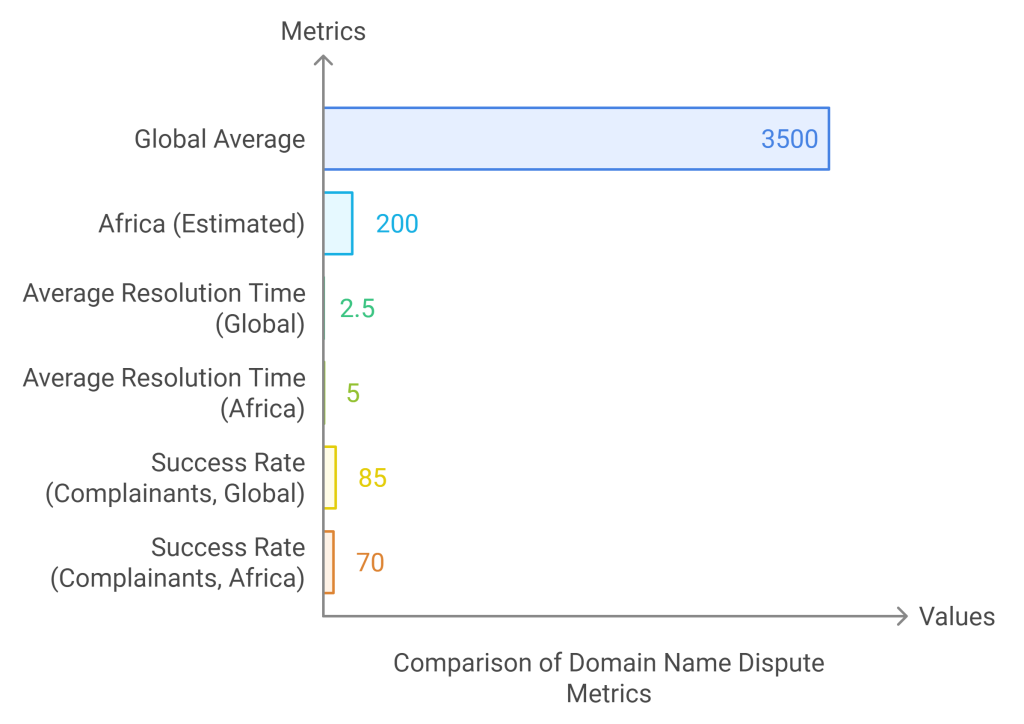
| Metric | Global Average | Africa (Estimated) |
|---|---|---|
| Annual Domain Name Disputes | ~3,500 | ~200 |
| Average Resolution Time | 2-3 months | 4-6 months |
| Success Rate for Complainants | 85% | 70% |
Note: African estimates are based on limited available data and expert projections.
Conclusion
Domain name dispute resolution in Somalia requires a delicate balance between traditional methods and modern legal frameworks. While the UDRP provides a global standard, its application in Somalia faces significant challenges.
Moving forward, developing hybrid approaches that respect local customs while addressing the technical nature of domain disputes will be crucial.
By building capacity, raising awareness, and fostering collaboration between traditional and modern systems, Somalia can create a more robust and effective domain name dispute resolution process.
Protect your digital assets in Somalia by registering your .so domain with Tayo Host, the only provider offering .so TLDs at $11.99. Secure your online presence today and benefit from expert support in navigating the unique landscape of Somali domain management.