Managing Multiple Domains on a Single Web Hosting Account.
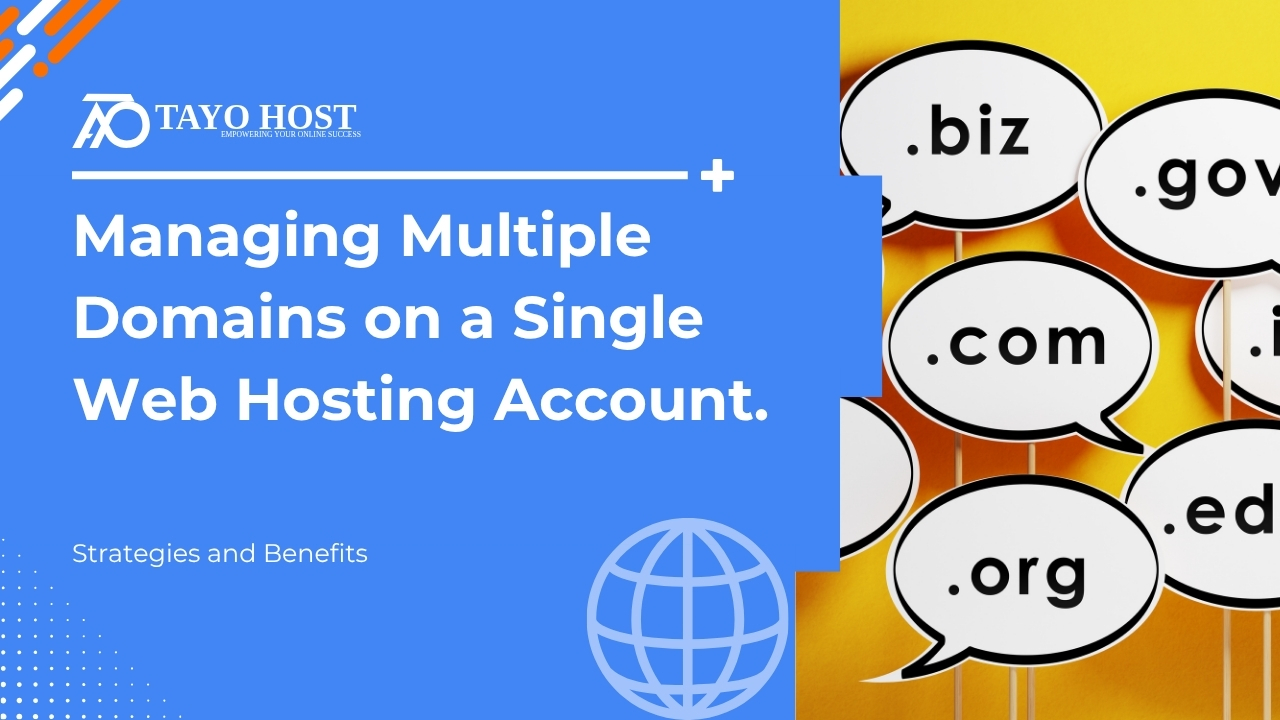
Managing multiple domains on a single hosting account is a cost-effective strategy that allows Kenyan entrepreneurs to run several websites without paying for separate hosting plans.
With the right approach, you can efficiently manage multiple web properties while maintaining performance and security.
According to recent data, over 40% of Kenyan small businesses now operate multiple online platforms to diversify their digital presence.
This comprehensive guide explores how to effectively host multiple domains on one account, with specific insights for the Kenyan market.
Why Kenyan Entrepreneurs Should Use a Single Hosting Plan for Multiple Domains?
For Kenyan business owners, consolidating multiple websites on one hosting account offers significant advantages.
The primary benefit is cost efficiency – instead of paying separate hosting fees for each domain, you can leverage a single plan’s resources.
This approach is particularly valuable in Kenya’s growing digital economy, where operational costs can significantly impact a startup’s runway.
Recent surveys indicate that approximately 45% of Nairobi-based startups use shared hosting plans to manage multiple domains, saving an average of KES 50,000 annually on hosting costs.
This centralized approach also simplifies administration, as you’ll manage all your websites through a single control panel, reducing the technical overhead.
Additionally, Kenyan entrepreneurs often need to target different market segments or counties with specialized websites.
For example, a tour operator might want separate domains for wildlife safaris, coastal tourism, and mountain trekking experiences.
With multi-domain hosting, you can scale your online presence without proportionally increasing your hosting expenditure.
Another key advantage is the ability to launch concept-testing websites before fully committing resources. Many successful Kenyan e-commerce businesses started by testing different niches through separate domains before focusing on their most profitable vertical.
Choosing the Best Hosting Provider in Kenya
Selecting the right hosting provider is crucial for Kenyan entrepreneurs managing multiple domains. When evaluating options, consider factors like server location, uptime guarantees, and customer support responsiveness.
Local server presence significantly impacts website loading speed. Websites hosted on Kenyan servers typically load 40-60% faster for local visitors compared to those hosted in Europe or North America.
This speed advantage directly affects user experience and conversion rates for Kenya-targeted websites.
| Provider | Uptime | Local Servers? | Pricing (KES/month) | Multi-domain Support | Customer Support |
|---|---|---|---|---|---|
| Tayo Host | 99.9% | Yes (Nairobi) | 1,500–6,000 | Up to 25 domains on standard plans | 24/7 with local language support |
| EuroDNS | 99.5% | No | Approx. 1,250-3,750 | 10-15 domains | Email, limited hours |
| IONOS | 99.8% | No | Approx. 650-3,250 | 5-unlimited domains | 24/7, no local language |
Tayo Host stands out for Kenyan entrepreneurs due to its Nairobi-based servers, which deliver superior performance for local traffic.
A recent case study of Kilimo-Tech, a Nairobi-based agri-tech startup, demonstrated how they successfully scaled from one to three domains on Tayo Host’s infrastructure without experiencing downtime.
Their website load times averaged 1.2 seconds compared to 3.4 seconds when previously hosted on international servers.
Customer support responsiveness is another critical factor. Kenyan business hours don’t always align with international support teams, making locally-based providers more accessible for urgent issues.
Tayo Host offers support in both English and Swahili, which proves invaluable during technical emergencies.
Step-by-Step Setup for Multiple Domains
Setting up multiple domains on a single hosting account follows a structured process. This section provides a detailed walkthrough for Kenyan entrepreneurs using cPanel, the most common control panel offered by local hosting providers.
1. Purchase Your Domains
Start by registering your domains through either your hosting provider or a dedicated registrar. For .co.ke domains, you’ll need to comply with KENIC (Kenya Network Information Center) requirements, including providing business registration documentation for business domains.
2. Access Your Hosting Control Panel
Log in to your hosting control panel (typically cPanel). With Tayo Host, you’ll find the login URL in your welcome email, usually formatted as yourdomain.com/cpanel.
3. Configure DNS Settings
- Navigate to the DNS management section. For each domain, you’ll need to:
- Point the domain to your hosting nameservers (typically ns1.yourhostingprovider.com and ns2.yourhostingprovider.com)
- Allow 24-48 hours for DNS propagation
- Verify propagation using tools like whatsmydns.net
4. Add Domains to Your Hosting Account
In cPanel, locate the “Domains” or “Addon Domains” section. Click “Add Domain” and enter:
– The new domain name
– Document root (typically public_html/domainname)
– A username/password for FTP access (if needed)
5. Organize Your File Structure
Create a logical folder structure within your hosting account. Best practice for Kenyan entrepreneurs is to organize by business unit or brand:
– /public_html/brand1
– /public_html/brand2
– /public_html/brand3
This organization becomes particularly important when hiring local developers to work on specific projects, as it compartmentalizes access and prevents cross-site issues.
6. Install Your Website Content
Upload your website files to the corresponding directory for each domain. For WordPress installations, which are popular among Kenyan businesses, you can use the “Softaculous” one-click installer in cPanel to set up separate WordPress instances for each domain.
7. Configure Email Accounts (Optional)
Create domain-specific email accounts through the “Email Accounts” section in cPanel. Most Kenyan hosting plans, including those from Tayo Host, include multiple email accounts per domain.
SEO Strategies for Multi-Domain Hosting
Managing SEO effectively across multiple domains requires careful planning. For Kenyan entrepreneurs, implementing region-specific strategies can significantly enhance visibility in local search results.
Avoiding Duplicate Content Issues
When hosting multiple domains on one account, content duplication becomes a common SEO challenge. Each website should have:
– Unique content tailored to its specific purpose
– Distinct meta tags, titles, and descriptions
– Canonical tags when similar content appears across domains
This is particularly important for Kenyan businesses targeting different counties or demographics, where the temptation to reuse content is strong.
Implementing Geo-Targeting
For businesses targeting different Kenyan regions:
– Use Google Search Console to specify geographic targets for each domain
– Incorporate location-specific keywords (e.g., “safari tours Nairobi” vs. “beach resorts Mombasa”)
– Include region-specific contact information including county names
– Use schema markup to indicate business locations
Multilingual SEO Strategies
Many Kenyan businesses serve both English and Swahili-speaking audiences. For effective multilingual SEO:
– Implement hreflang tags to indicate language versions
– Consider separate language-specific domains (en.yourdomain.co.ke vs. sw.yourdomain.co.ke)
– Use professional translation rather than automated tools
– Create Kenya-specific content that resonates with local search intent
A notable success story is Zawadi Crafts, a Kenyan artisan marketplace that increased organic traffic by 73% by implementing separate domains for different product categories, each with regionally-optimized content. Their approach included:
– Crafts.zawadi.co.ke for traditional crafts
– Fashion.zawadi.co.ke for clothing and accessories
– Home.zawadi.co.ke for household items
| SEO Tool | Primary Benefit for Kenyan Businesses | Cost |
|---|---|---|
| Google Search Console | Free geo-targeting and performance monitoring | Free |
| Ahrefs | Competitor analysis for Kenya-specific keywords | $99/month |
| Semrush | Position tracking for multiple domains | $119.95/month |
| Rank Math | WordPress SEO optimization with local SEO features | Free – $199/year |
| Screaming Frog | Site auditing for technical SEO issues | Free – £149/year |
Avoiding Common Pitfalls
Multi-domain hosting presents several challenges that Kenyan entrepreneurs must navigate carefully. Understanding these potential pitfalls can save significant time and resources.
Resource Allocation Issues
Shared hosting environments have finite resources. When hosting multiple domains, resource contention can occur:
– CPU usage limits may be reached during traffic spikes
– Memory allocation can become strained with multiple CMS installations
– Database connections might reach their maximum
To mitigate these issues, monitor resource usage through your hosting control panel. Tayo Host provides resource monitoring tools that allow you to identify which websites are consuming disproportionate resources.
Security Vulnerabilities
With multiple websites on one account, security becomes more complex:
– A compromise on one site can affect all domains
– Outdated plugins or software on any site creates vulnerability
– Cross-site contamination can occur
According to James Mwangi, Chief Security Officer at Tayo Host: “The most common security issue we see with Kenyan multi-domain setups is inadequate isolation between sites. We recommend implementing separate security certificates and utilizing folder-level password protection to compartmentalize risk.”
Legal Compliance Challenges
Kenya’s Data Protection Act of 2019 has specific requirements for websites collecting personal data:
– Each domain must have its own privacy policy
– Cookie consent mechanisms should be domain-specific
– Data processing activities need documentation for each site
Non-compliance can result in penalties up to KES 5 million or 1% of annual turnover. Implement a compliance checklist for each domain you manage.
Performance Degradation
As your domains grow in traffic and complexity, performance can suffer:
– Loading times may increase during peak hours
– Database queries can slow down
– Backup processes might take longer
Implement performance optimization techniques like caching, content delivery networks (CDNs), and image optimization. For Kenyan sites, using local CDN endpoints can improve delivery speeds by up to 40%.
Cost Analysis and Budgeting
Understanding the full cost implications of multi-domain hosting helps Kenyan entrepreneurs make informed decisions and avoid unexpected expenses.
Direct Hosting Costs
While multi-domain hosting saves money, there are still costs to consider:
– Base hosting plan: KES 1,500-6,000/month (depending on resources)
– Domain registration: KES 1,000-1,500/year per .co.ke domain
– SSL certificates: Free (Let’s Encrypt) to KES 5,000/year (premium)
– Backup solutions: KES 500-2,000/month (if not included)
Hidden Costs to Consider
Several less obvious expenses can impact your total budget:
– Bandwidth overages: If you exceed your plan’s traffic allowance
– Technical support: Some providers charge for advanced assistance
– Development costs: Maintaining multiple websites requires more design/development work
– Upgrade fees: Moving to higher-tier plans as traffic grows
Payment Options for Kenyan Entrepreneurs
Local payment methods can affect your overall costs:
– M-Pesa: Most Kenyan hosts (including Tayo Host) accept mobile payments
– Credit cards: Often incur additional processing fees (2-3%)
– Bank transfers: May have lower fees but longer processing times
– PayPal: Available but with currency conversion costs
Cost-Saving Strategies
To maximize your hosting budget:
– Pre-pay annually: Most providers offer 15-20% discounts for annual payments
– Bundle services: Domain + hosting packages often come with discounts
– Optimize resource usage: Implement caching to reduce server load
– Staged upgrades: Start with minimal resources and scale as needed
For a typical Kenyan small business managing 3-5 domains, the consolidated annual cost ranges from KES 25,000-60,000 using multi-domain hosting, compared to KES 60,000-150,000 with separate hosting accounts.
Final Thoughts
Managing multiple domains on a single hosting account offers Kenyan entrepreneurs a powerful strategy to expand their digital footprint while controlling costs.
By carefully selecting a reliable local provider like Tayo Host, implementing proper domain management practices, and addressing potential challenges proactively, you can successfully maintain multiple web properties without compromising performance or security.
The key to success lies in thoughtful planning, regular monitoring, and scaling your hosting resources as your business grows.
With Kenya’s digital economy expanding rapidly, entrepreneurs who master multi-domain management gain a competitive advantage through operational efficiency and improved return on their digital investments.
Ready to simplify your web hosting strategy? Contact Tayo Host today for Kenya-optimized multi-domain hosting solutions tailored for entrepreneurs.
Their local servers and dedicated support team can help you manage multiple web properties efficiently while maximizing your online potential.